5 Lessons from 500+ Walks

What makes conversation easier, newcomers feel welcome, and people want to come back.
Rubik's cubes. Your newest obsession. Whether love is a feeling or a choice.
Those are three of the topics people recently brought to The Board Walks. The walks make room for all of it.
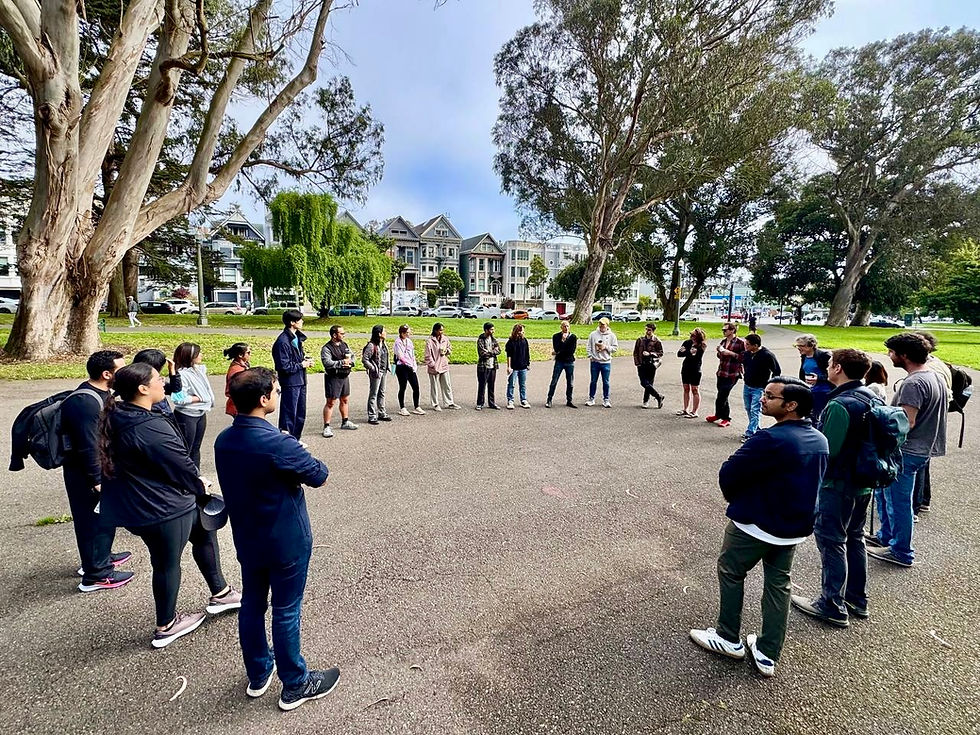
The format stays simple: five miles, Saturday morning, phones away, something on your mind to share. We've now held 500+ walks across 20+ cities.
Getting people together is only the beginning. Keeping the gathering welcoming takes small, deliberate choices.
These are five lessons I'd keep, whether you're joining a group, hosting one, or trying to make more room for connection in your own life.
1. Make coming back easier than starting over
A first conversation gives you something to build on. A place to return gives you the chance to build it.
If seeing someone again requires finding a date, choosing a place, and sending three follow-up texts, a promising friendship has acquired a project manager before it has acquired a second conversation.
A recurring gathering removes some of that work. Same day. Same time. You can return without inventing the occasion again.
It doesn't guarantee that you'll find your people. Familiarity takes different amounts of time, and not every group will fit. But it gives a first meeting a chance to become more than a pleasant thing that happened once.
Showing up still takes energy. The point is to stop spending all of it arranging the opportunity.
2. Be interested before you try to be interesting
You don't need a spectacular story to contribute to a conversation. You need to leave room for somebody else's.
Notice the part of their story they nearly skipped. Ask what happened next. Remember the thing they were excited about and ask how it went.
Questions help, but a question isn't automatically curiosity. You can ask a brilliant one and spend the answer preparing your own speech.
Sharing something of yourself matters, too. It gives the other person something to respond to. The distinction isn't between asking and telling. It's between taking turns performing and actually responding to each other.
"What do you do?" can lead somewhere good. So can "What's your favorite myth?" The useful question is the one whose answer you're willing to follow.
3. Give the conversation something else to look at
Across a table, a silence can feel like something you need to fix.
On a path, it can just be a silence. You're still going somewhere. There's a turn ahead, a dog passing, something happening besides the conversation.
Walking side by side gives people a shared pace without requiring constant eye contact. For some of us, that makes talking feel less like an interview.
Some people prefer a table, and five miles isn't accessible to everyone. Walking is one useful format, not the only way to connect.
The lesson is bigger than walking: when conversation feels difficult, consider the setup before deciding you're the problem. An ordinary activity can give people room to talk without making talking the entire assignment.
4. Remove the entrance exam
Imagine wanting to meet people and finding that every option requires an invitation, a ticket, a partner, or knowing somebody who already belongs.
Eventually, "I want connection" starts to sound like "I have more things to organize."
At our walks, you don't need to arrive with friends or prove that you're interesting enough to join. It's free. There's a start, an end, and a shared thing to do.
Those choices remove barriers before a conversation even begins. Whether someone can join is part of the setup, not a test of their social skills.
We believe the loneliness crisis is an environment problem, not a connection problem.
That's where we choose to work. It isn't the whole story of every person's loneliness. Grief, anxiety, disability, cost, and time can still make connection hard. A welcoming gathering can't erase all of that.
But it can stop making an invitation or an impressive introduction the price of admission.
5. A welcoming culture needs tending
Free admission gets someone through the door. It doesn't tell them what will happen once they're inside.
That part lives in small choices. Does somebody notice the person who hasn't been included yet? Is a pause allowed? Can an ordinary answer stay ordinary, or does everyone have to reveal something profound?
Phones away is one way we protect attention. No pitching is another. People shouldn't have to wonder whether a friendly conversation is warming them up for a sales call.
Neither standard means everyone must be serious. You can talk about a movie for an hour. You can laugh. You can keep something private.
The goal isn't to extract depth from people. It's to give them enough attention and ease that a conversation can go where they actually want it to go.
Hosts help hold that culture. So does everyone who makes room for a newcomer, listens without rushing, or resists turning another person into an opportunity.
A format can be repeated. A welcome has to be offered again.
What to keep
Some of these lessons ask more of the gathering. Some ask more of us.
Give people somewhere to return. Be willing to follow an answer. Make the setup easier. Lower the barriers. Keep tending the welcome.
None of that guarantees a friendship. It gives one somewhere to begin, and somewhere to continue.
If you'd like to try it with us, The Board Walks hosts free Saturday walks in 20+ cities. Come alone or bring a friend. Bring something you've been thinking about. It doesn't need to be profound.