Why making friends as an adult feels so hard

Ten things that can get in the way, and a small way around each.
You can have a life full of people and still struggle to make a new friend.
There are colleagues you like. People you recognize at the gym. Someone you had a great conversation with at a party and have not seen since. Nothing terrible happened. The next meeting simply never acquired a time or a place.
That is one reason adult friendship can feel so confusing. You may be doing the part where you meet people reasonably well. The part where you keep meeting them is harder to arrange.
Not every obstacle is structural. Sometimes you are afraid to ask. Sometimes an invitation is not returned. Sometimes someone is lovely and the two of you do not click.
But before making the whole thing a judgment about yourself, look at what the friendship would actually have to work with.
Here are ten common obstacles, not a diagnosis of your life. Take the ones that fit.
1. The built-in meeting places disappeared
School put people in your path repeatedly. So did a shared apartment, a team, or an office you both went to. Once that setting disappears, you have to create contact that used to arrive on its own.
Try: Choose one recurring gathering you would enjoy even before making a friend there. A familiar place is a useful beginning.
2. You keep meeting people only once
A good conversation gives you a starting point. It does not arrange the second one. One-off events can be fun. They can also leave you doing introductions again every week.
Try: Return somewhere before deciding it did not work.
3. Your available hours do not match
You are free on Tuesday. They work late. Their Saturday is for caregiving. Your Sunday is for recovering from everything else. Affection cannot manufacture overlapping time.
Try: Look for a small overlap, not an ideal evening. A short call or a walk during an ordinary errand may be easier than dinner.
4. Going out comes with a price
Food, tickets, transport, and childcare can turn a casual invitation into a decision that needs a budget. Saying no to the cost is not necessarily saying no to the person.
Try: Offer something genuinely affordable, and leave room for the other person to say what works. A free activity can still have travel or access costs.
5. You are both waiting for the invitation
It is easy to assume someone already has enough friends. It is harder to find out whether they would like to see you. They may be making the same assumption. Or they may not be interested. A small invitation gives you more information than guessing.
Try: "Would Sunday morning at the market work for you?" Let a no be a no, without making either of you the villain.
6. The other side of town is further than it sounds
You live in the same city, but seeing each other takes two buses or forty minutes in traffic. A casual hour together becomes half a day. Distance can change how often a friendship fits, even when neither of you has moved very far.
Try: Meet halfway, or attach the catch-up to a journey one of you already makes. Do not assume everyone can travel equally.
7. Free time is not the same as spare energy
The evening is open. You are not. After work, caregiving, or a difficult week, choosing company may mean spending energy you do not have. That is a different problem from finding a gap in the calendar. Rest matters, and a friendship should have room for it.
Try: Offer a lower-demand way to keep in touch, or say when you might have more capacity. A short voice note can be contact without becoming another appointment.
8. You do not know how to move beyond polite
You know their job. They know yours. Both of you are waiting for something less administrative to happen. Depth does not require a confession. An ordinary interest can be enough.
Try: Ask what they are enjoying lately. Listen for something you actually want to know more about, rather than reaching for the most impressive question.
9. Your life keeps changing
A move, a new job, a child, or a change in health can rearrange your social world. Sometimes the old ways of seeing people no longer fit. You do not have to solve the new version all at once.
Try: Keep one connection from the previous chapter and make room for one local or online routine in this one.
10. A slow start becomes a verdict
"That was awkward" becomes "I'm awkward." "We haven't met again" becomes "Nobody wants to know me." Neither conclusion follows automatically. You may need a different setting, more time, or a different person.
Try: Ask what happened before deciding what it says about you. And notice whether you genuinely want this connection, not just whether it would prove you can make one.
Give friendship something to work with
You cannot design another person's interest. You can make it easier for mutual interest to have somewhere to go.
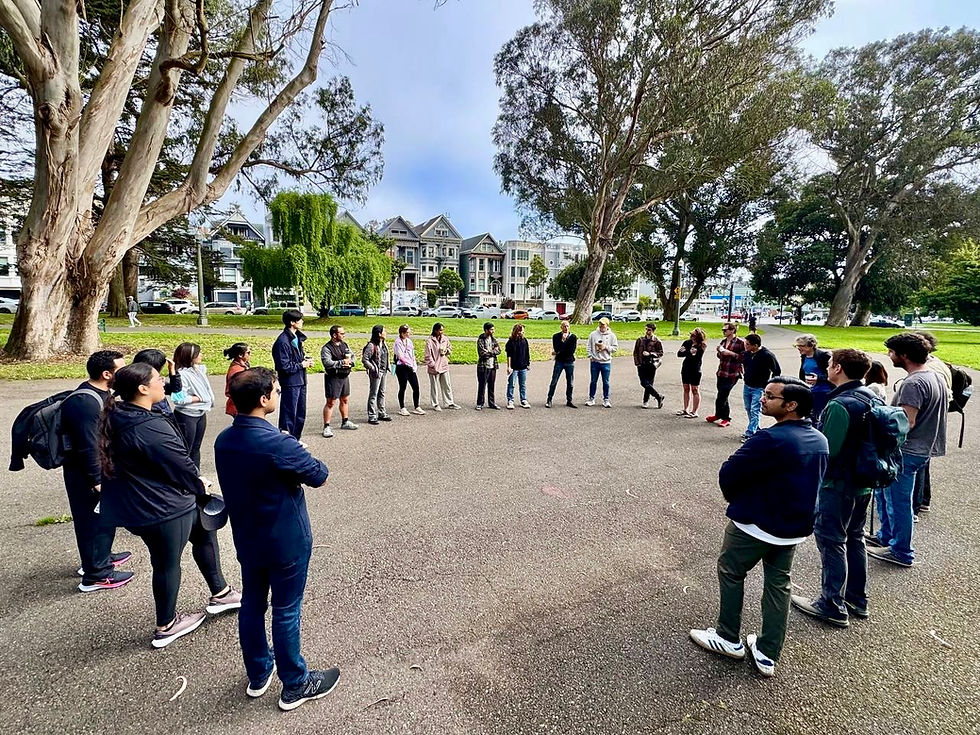
That is part of what The Board Walks offers: a free five-mile walk every Saturday morning in 20+ cities. Phones away, an opening circle, and time to walk beside people. Come alone or bring a friend. Check your city's route and details before you RSVP.
One Saturday does not promise a friendship. It does give you a chance to meet again.
You do not need to fix your whole social life this week. One invitation, one return, or one better-fitting way to see someone is a real start.
See you Saturday,
Elle & Cameron Hogan
Founders of The Board Walks